
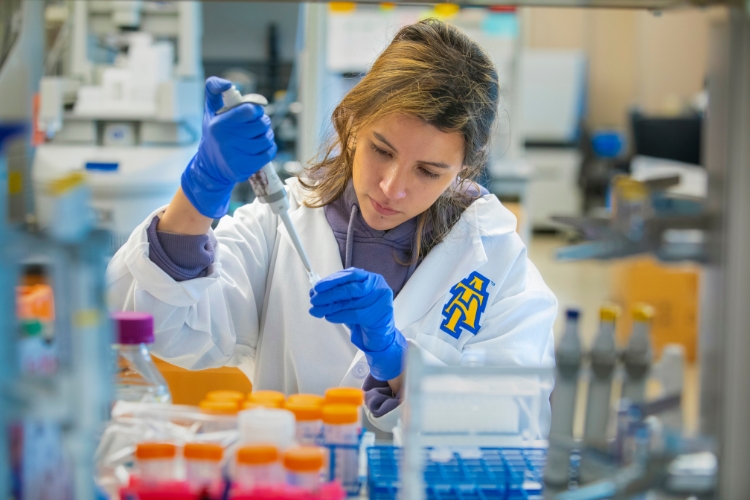
Land-grant universities were founded with a unique mission to make game-changing discoveries in the lab that transform the outside world. Through their education, research, and Extension missions, public and land-grant universities strengthen American agriculture by preparing the next generation of farmers and food scientists, driving groundbreaking research and innovation, and delivering practical, research-based support to communities through Extension.
APLU recently hosted a Capitol Hill reception showcasing the joys and real-world impact of public and land-grant university creameries. Discover how three participating universities are innovating in the growing field of dairy science.
Featured photo courtesy of James Parker/North Carolina A&T State University.
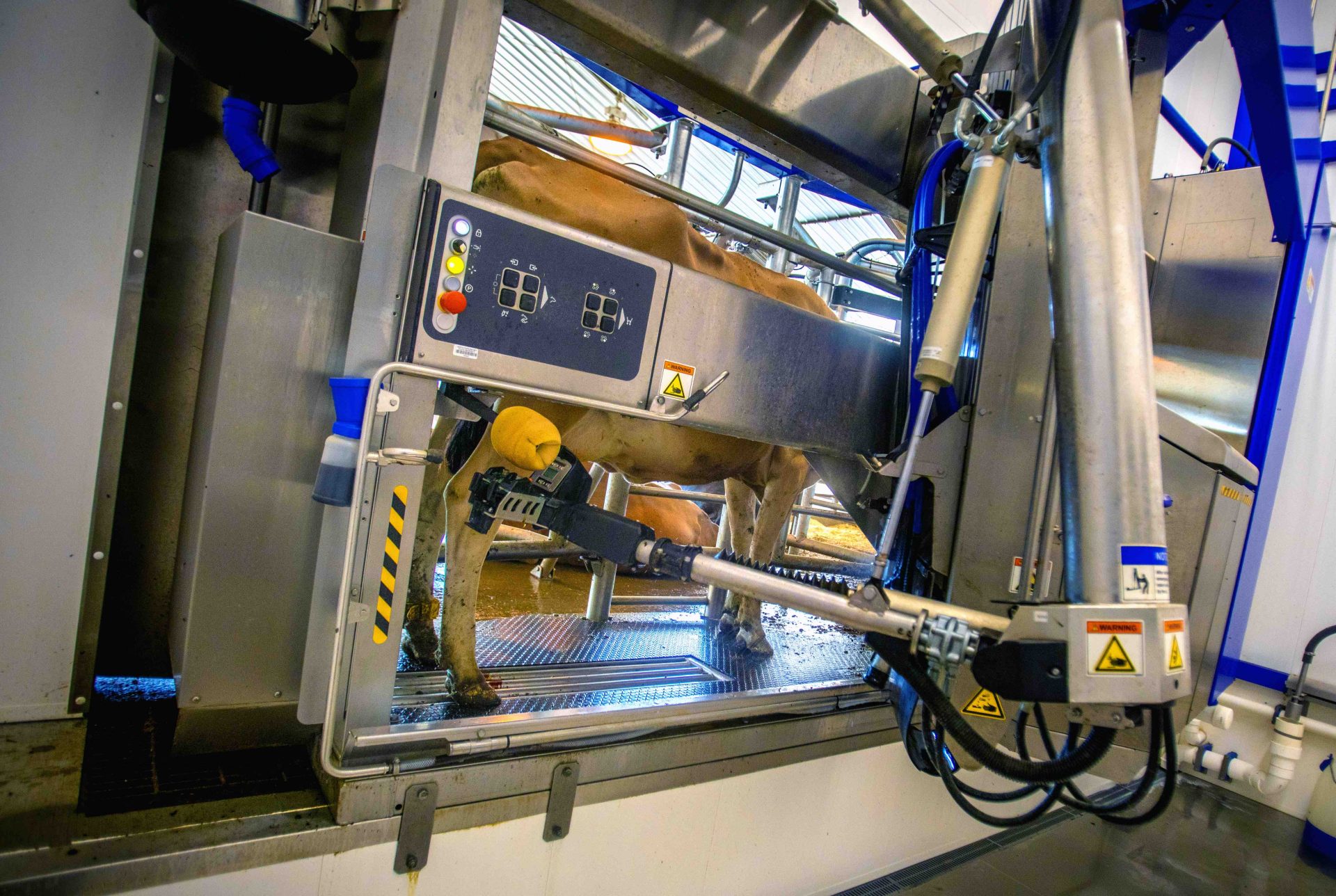
The robotic arm positions itself under a cow’s udder in the Automated Milking System in the dairy unit at the N.C. A&T State University Farm.
Dairy Meets Precision Agriculture:
The North Carolina A&T State University Automated Milking System
North Carolina A&T State University’s (N.C. A&T) dairy program includes an advanced Automated Milking Systems (AMS), a unique approach to using precision agriculture in animal husbandry. The technology improves animal welfare while lowering operating costs and overall milking times. The system automatically collects and analyzes data with the help of AI, giving researchers, students, and dairy operators unparalleled, real-time data insights into animal nutrition and wellbeing, as well as operational performance of the dairy. Experience with this system gives students advanced knowledge of precision technologies and helps prepare them for careers in the dairy industry. N.C. A&T is the only HBCU in the nation to have an AMS.
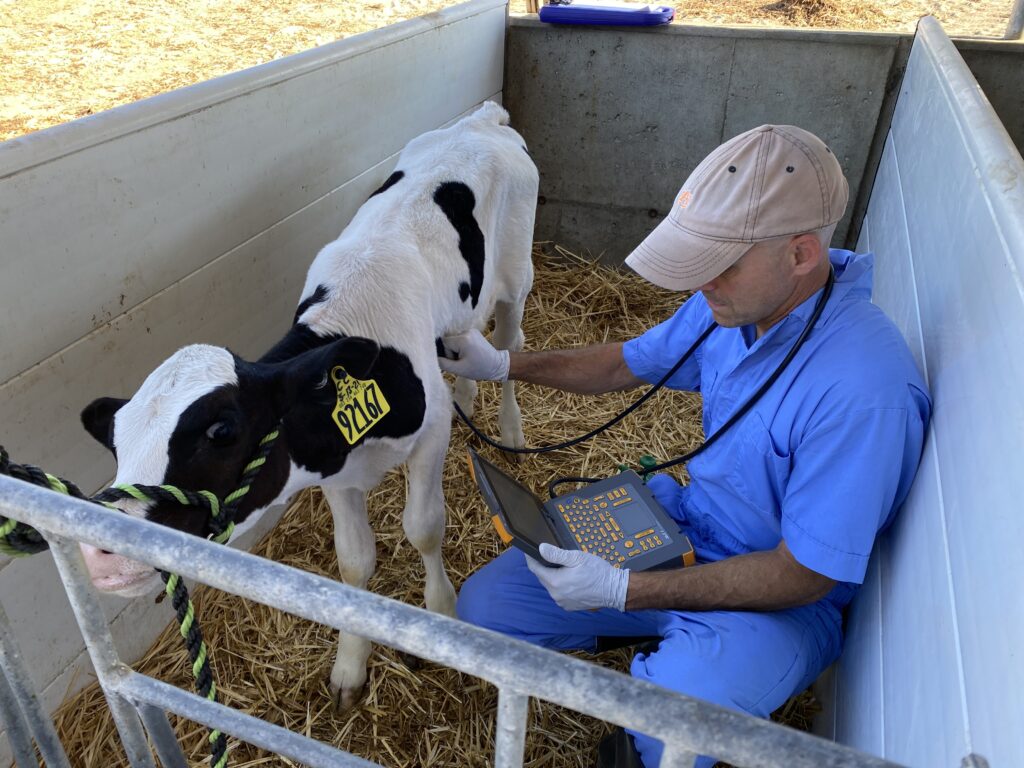
Craig McConnel, associate professor of WSU Veterinary Medicine Extension and study lead. Photo by Katy Heaton/WSU Veterinary Medicine Extension.
Washington State University Researchers Pioneer New Health Model that Advances Dairy Profitability, Animal Welfare
Washington State University (WSU) researchers are wrapping up a five-year study that will help veterinarians and dairy producers quantify how much milk-production time is lost due to disease or injury. The new metric, called DairyLifetime, describes how many productive, healthy days lactating cows lose to illness or injury, rather than just counting cases of disease within a herd. The five-year study involved WSU undergraduate and graduate students from across disciplines as well as WSU Veterinary Medicine Extension, who connect scientific tools with the day-to-day decisions facing livestock producers and veterinarians. The new approach to measuring health in dairy cattle promises to offer a clearer picture of the true cost of disease to animal well-being and milk production.
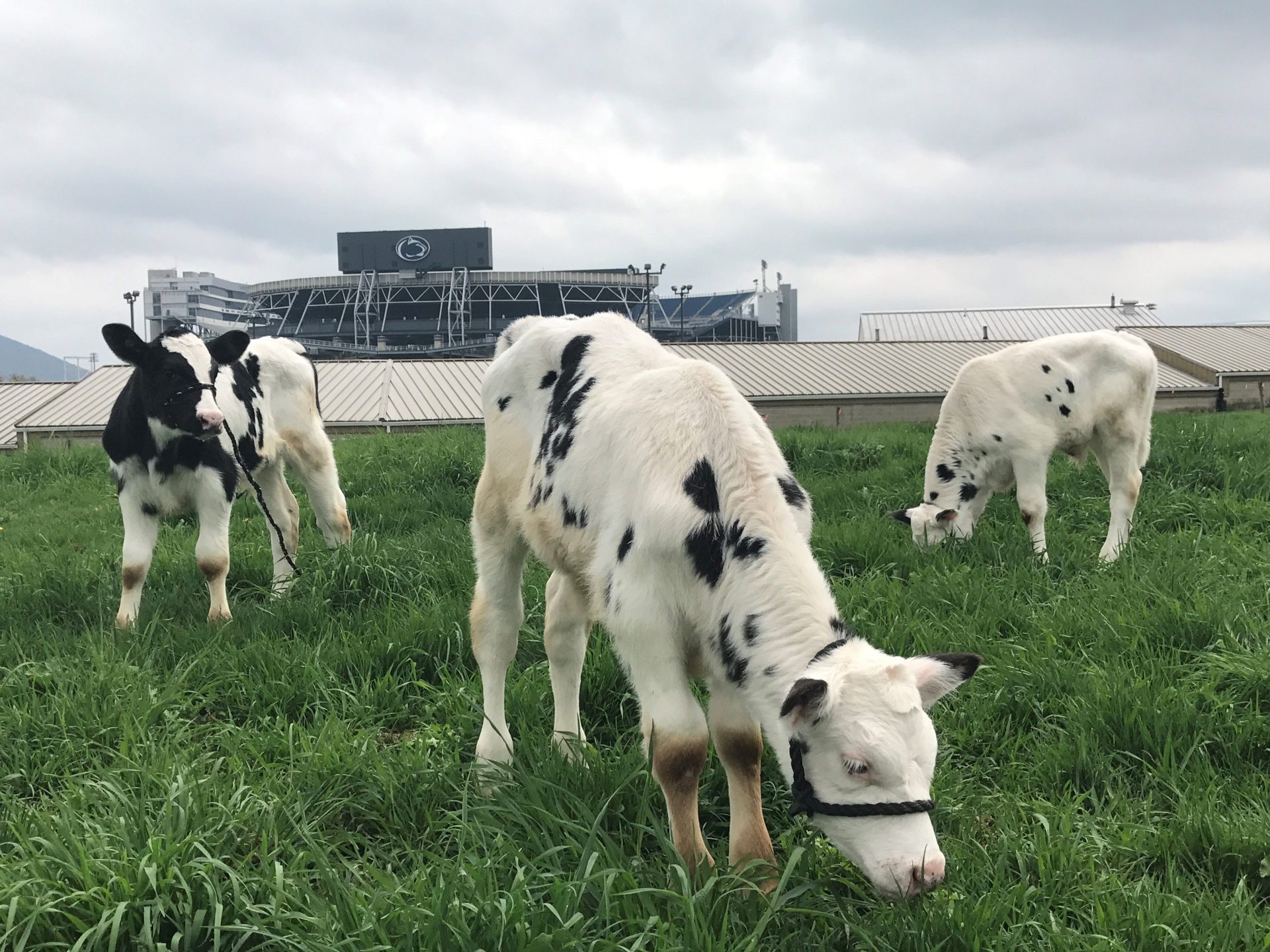
Three of the 15 Holsteins that were born at Penn State’s Dairy Barns in 2017, the result of a research project to reintroduce valuable genetic variance to the breed. Photo by Amy Duke/Penn State.
Penn State Brings Latest Dairy Research Directly to Farmers Through AI
In early 2026, the Penn State College of Agricultural Sciences launched Tilva, an innovative AI-powered digital educator that connects farmers directly to Penn State Extension expertise. In fact, when asked about Penn State’s research into dairy science, Tilva can tell you in its own words! According to Tilva: Penn State is actively engaged in research to advance the dairy industry, focusing on areas such as precision technology, animal health, and genetic optimization. By integrating fields like artificial intelligence, microbiology, and animal science, researchers are working to improve farm efficiency, sustainability, and animal welfare. Current research initiatives include precision dairy science and AI; beef-on-dairy crossbreeding; heard health and disease management.
Learn more about APLU’s Scoops of Science event.
Share this Post