
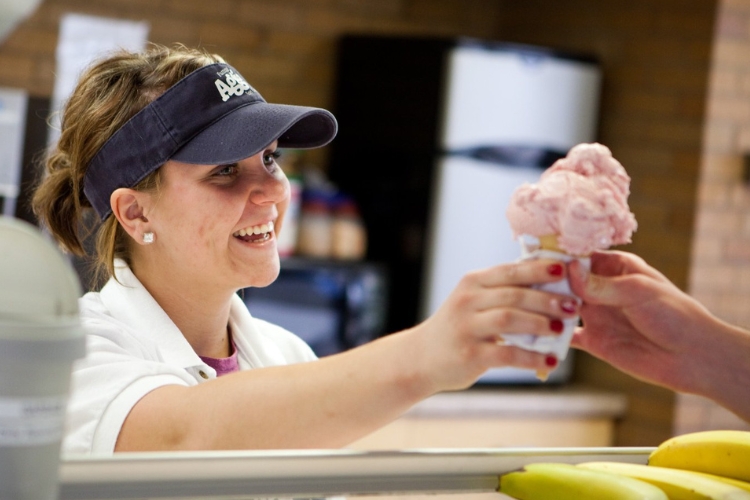
As the dairy industry continues to evolve, so does the need for a skilled, adaptable workforce. Public and land-grant universities are helping meet this demand through on-campus creameries, industry partnerships, youth development opportunities, and more. Across the country, university dairy programs blend science and business, ensuring students not only understand dairy production, but also how to innovate and lead within a rapidly evolving industry.
Featured photo courtesy of Utah State University.

State-of-the-Art Learning Environments: Modern Facilities Support Workforce Readiness
By learning in facilities that reflect current industry standards, students graduate ready to work with the tools, technologies, and systems that define today’s dairy operations.
Michigan State University’s new Dairy Cattle Teaching and Research Center was intentionally designed to operate like a commercial dairy. Students gain hands-on experience with herd management, data collection, and decision-making, all while working with the same technologies used across today’s industry. A new robotic milking barn at the University of Maine integrates automation and data analytics into daily learning, allowing students to develop skills in both animal care and precision agriculture.
Beyond the Barn: Business and Leadership Skills for Dairy Careers
Building in-demand skills like communication, management, and problem-solving sets up students for success.
At Iowa State University’s Creamery, students actively produce ice cream and cheese, manage inventory, and engage with customers. For many students, this applied experience becomes a launchpad to full-time employment after graduation. Cornell Cooperative Extension’s Milk Bar at the Great New York State Fair provides a similar hands-on introduction for teens. In what for many was their first ever paid job, 40 participants developed skills in customer service, teamwork, and communication through positions as cashiers, milk pourers, and stockers. Training in food safety and field trips to local dairy farms helped connect their work to the broader agricultural system.
Real-World Impact: Connecting Innovation and Industry
Preparing students for the workforce requires direct engagement with industry and real-world challenges.
At Cal Poly’s Dairy Products Technology Center, students work alongside faculty and industry partners to develop new products, conduct applied research, and solve real-world problems. Many notable products got their start at Cal Poly and are now found on shelves nationwide including the low-calorie, high protein Halo Top ice cream and Fairlife milk, a value-added lactose-free cow’s milk. At North Carolina A&T State University, visual arts students were challenged to use their advertising, typography, and design skills to create a name and logo for a new campus creamery. The project illustrates how dairy programs engage students across disciplines, reflecting the wide range of careers that support the dairy industry. (Hear from the winners here!).
Public and land-grant universities are strengthening the dairy workforce through a practical, connected approach that brings together modern facilities, hands-on learning, and industry engagement. By preparing students to work across disciplines and adapt to industry change, these programs are helping build a skilled workforce for the future of dairy.
Share this Post