
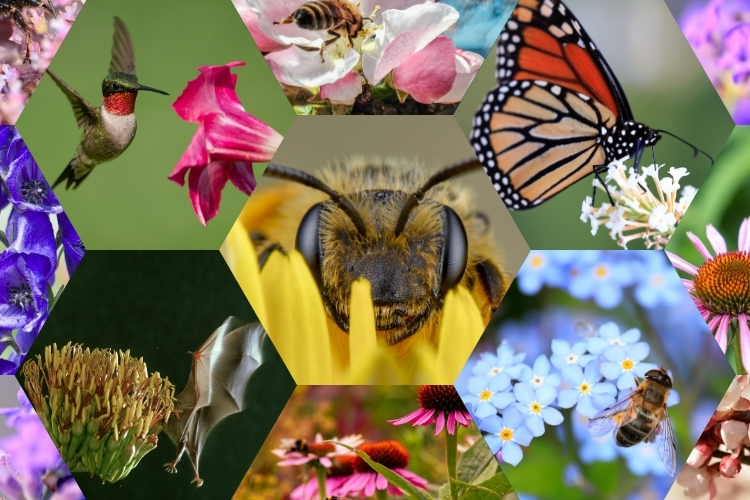
Did you know? More than 80% of flowering plants and about 75% of food crops depend on pollinators, making their health essential to agriculture and our food supply.
Growing Pollinator Habitat
Creating habitat is one of the most immediate and effective ways to support pollinators. Whether in backyards or across entire landscapes, habitat creation is foundational to pollinator recovery.
In Connecticut, UConn Extension is supporting pollinator health through sustainable landscapes, including demonstration meadows, native plant resources, and tools to help communities assess and improve pollinator habitat.
In Michigan, MSU Extension is advancing pollinator stewardship through education and practical guidance, where 97% of participants reported increased knowledge and 97% intend to adopt practices that protect pollinators and reduce pesticide exposure.
At Texas A&M AgriLife Extension, the Texas Plant Party webinar series reaches land managers across more than 100 million acres, providing education on native plants that support pollinators, wildlife, and ecosystem restoration.
At Alabama A&M University Extension, the Greener Living through Home Horticulture program is bringing pollinator education into urban communities, where 92% of participants increased their understanding of pollinators and pollinator-friendly gardening practices.
Science to Protect Pollinators
Understanding the science behind pollinator health and behavior is key to protecting these species.
In California, researchers are working to leverage native bees in agriculture, helping farmers improve pollination while reducing risks from pesticide exposure.
At Penn State, scientists and Extension partners are mobilizing community science, helping identify 235 bee species, including several new records, providing critical baseline data on pollinator diversity and decline.
Supporting Pollinators on Farms and Working Lands
Farmers and land managers play a critical role in pollinator conservation, and Extension programs are helping them integrate pollinator-friendly practices into everyday operations.
In Nevada, Integrated Pest Management programs are helping farmers and land managers adopt lower-risk pest control practices that reduce pesticide impacts while supporting pollinator-friendly landscapes.
In Vermont, Extension researchers are working directly with farmers to test cover crops like buckwheat and legumes that provide nectar resources for pollinators while improving soil health. These trials show that pollinator habitat and productive agriculture can coexist, supporting both biodiversity and farm resilience.
From backyard gardens to agricultural fields, land-grant universities are helping people take simple actions that make a big difference for pollinators.
Share this Post