
Making the right decision at the right time can make all the difference in farm productivity and profitability. By combining advanced analytics with practical agricultural expertise, land-grant university researchers are helping producers address challenges ranging from labor shortages and weather variability to resource efficiency and food production. This work ensures agricultural innovation responds to producers’ needs while strengthening the food system that Americans rely on every day.

AI-Powered Farming
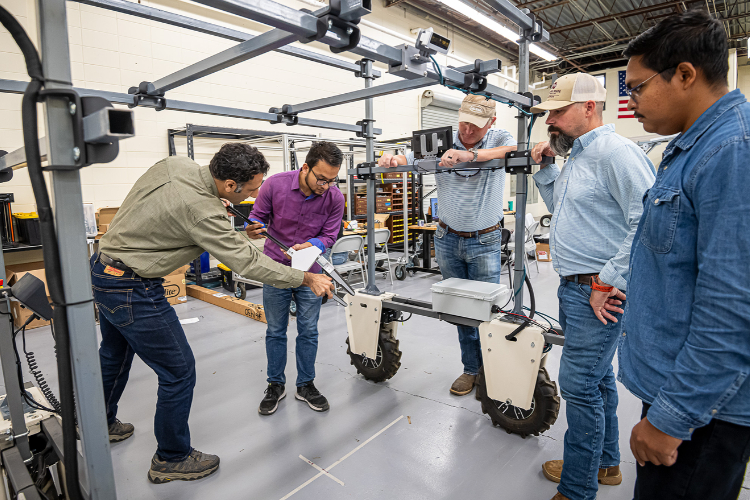
The University of Illinois Urbana-Champaign created the AI for Future Agricultural Resilience, Management, and Sustainability (AIFARMS) National AI Institute for Agriculture to tackle challenges such as meeting global demand for food, reducing environmental impacts of farming, increasing affordability, and enhancing accessibility. The institute leverages dramatic advancements in AI, such as low-cost semi-autonomous systems that augment human efforts.
Data-Driven Decisions
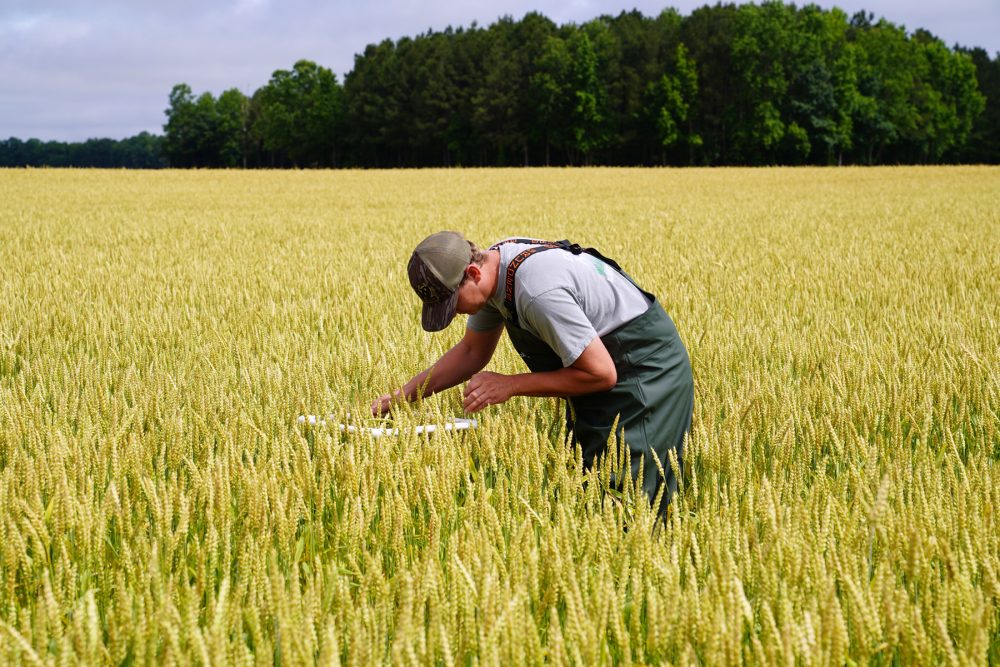
Researchers at Virginia Tech are helping agricultural producers manage weather-related risks and make informed decisions with research-based information and practical tools. Farmers could see gains of up to 24 bushels per acre, translating to more than $100 per acre of wheat. Findings can be used on the Medius.RE Trial Data platform, which provides regional information on wheat planting dates, disease pressure, performance, and yield potential.

Drone-Guided Crop Management
A digital agriculture research team at the University of Missouri combined drone imagery with machine learning to provide farmers with more accurate information about corn crop health. This innovative application of emerging technology has the potential to improve the efficiency of agricultural systems while helping producers make more informed management decisions.
Precision Livestock Management
South Dakota State University’s Precision on the Prairie developed a producer-ready data pipeline and AI nutrition models that turn precision livestock sensor data into real-time rangeland management insights. Using in-pasture weights, GPS movement, and forage estimates, the team built tools to monitor growth, energy use, and supplementation needs for individual cattle. The model reduced supplement use and saved producers approximately $56 per head over seven months.

Robotic Harvesting
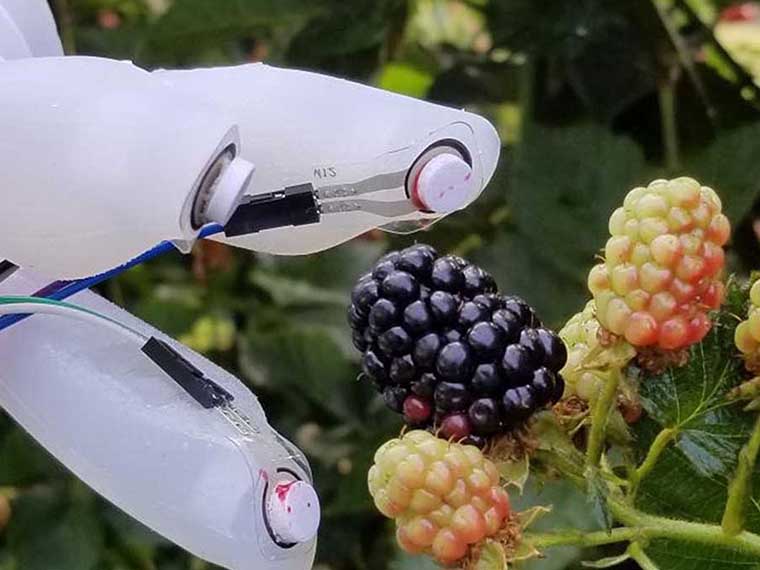
Mississippi Agricultural & Forestry Experiment Station scientists are revolutionizing blackberry harvesting with an advanced robotic system powered by artificial intelligence and deep learning. The technology improves harvesting efficiency, reduces labor costs, preserves fruit quality, and enhances the profitability and long-term sustainability of blackberry production.
Land-grant universities develop, test, and apply rapidly evolving technologies to address real-world agricultural needs. By connecting scientific and practical expertise, they turn new approaches into useful tools for farmers, ranchers, and communities. This work ensures agricultural innovation responds to producers’ needs while strengthening the food system that Americans rely on every day.
Featured photo courtesy of David Ammon/Mississippi Agricultural & Forestry Experiment Station.
More From: Animal Health/Management/Performance/Welfare, Artificial Intelligence and Emerging Technologies, Illinois, Mississippi, Mississippi State University, Missouri, North Central Region, Precision Agriculture, Research, South Dakota, South Dakota State University, Southern Region, Specialty Crops, University of Illinois, University of Missouri, Virginia, Virginia TechShare this Post