
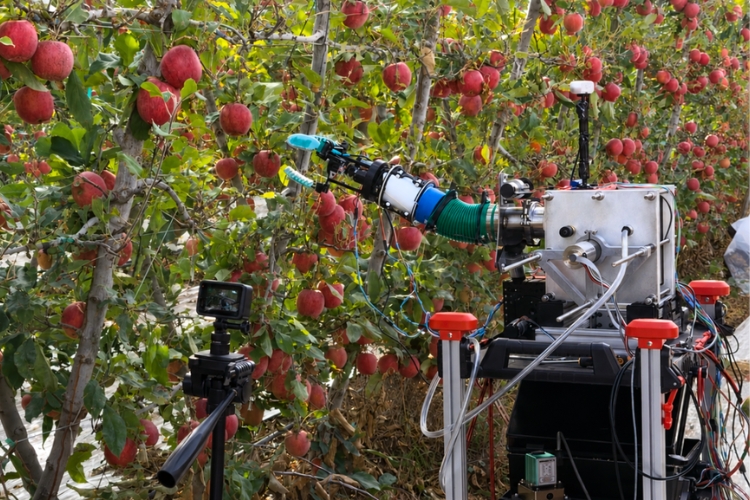
How America’s Favorite Fruit Is Getting a High-Tech Upgrade
Each autumn, apples take center stage in farmers markets, grocery stores, and family kitchens across the country.
As producers work to meet consumer demand, they are also navigating labor shortages, rising production costs, and environmental pressures. Land-grant universities, equipped with a new generation of technology, are helping apple producers improve efficiency, reduce waste, and keep orchards productive and profitable.

Mapping the Modern Orchard
In New York, Cornell Cooperative Extension’s Lake Ontario Fruit Program is helping apple growers use drones, digital imaging, and precision agriculture tools to improve orchard management. By mapping bloom density and monitoring fruit development throughout the season, these technologies provide growers with better information for pruning, thinning, and spraying decisions.
Teaching Robots to Thin Apples
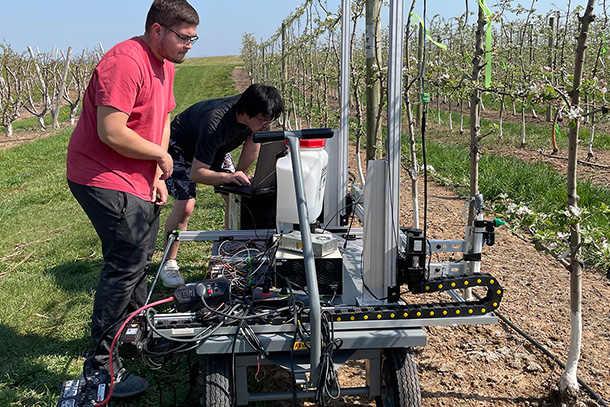
At Penn State, researchers are developing a robotic apple blossom thinning system designed to reduce labor demands and chemical use. Using machine vision and targeted spraying technology, the system identifies flower clusters and applies thinning materials only where needed, improving efficiency while maintaining comparable thinning performance.
Harnessing AI for Smarter Orchards
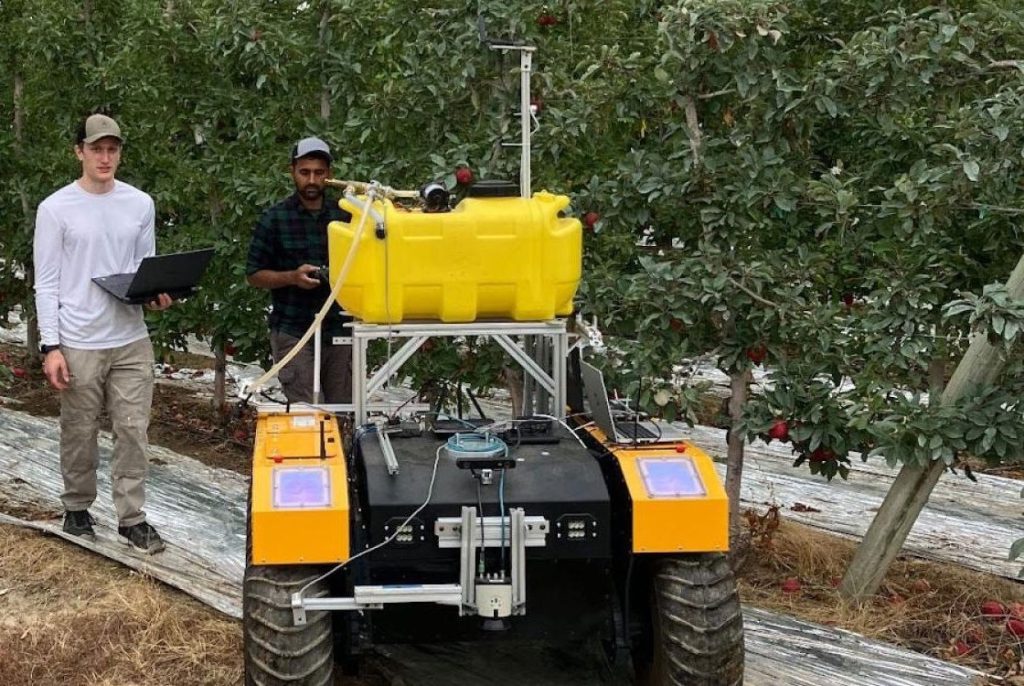
Researchers from Oregon State University and Washington State University are developing artificial intelligence and robotics technologies to support orchard sustainability. Their work includes a robotic fertilizer system that uses AI and 3D imaging to assess individual trees and apply nutrients with greater precision, helping growers improve efficiency while reducing waste.
Featured photo courtesy of Cornell University.
Share this Post