
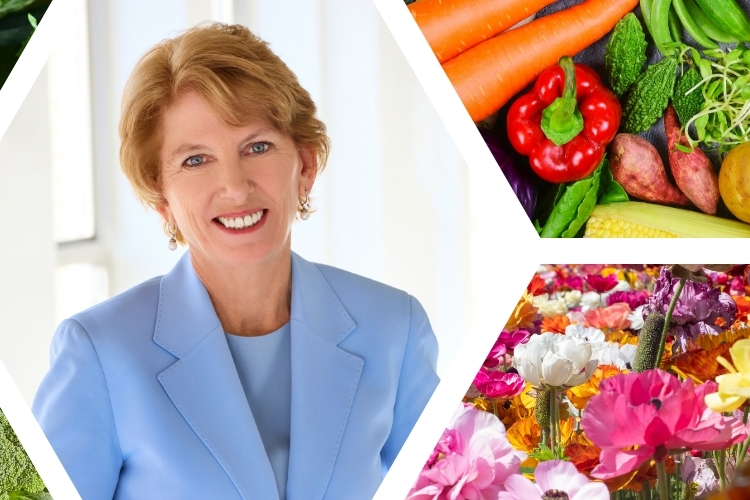
Cathy Burns is CEO of the International Fresh Produce Association (IFPA), the largest and most diverse international association serving the entire fresh produce and floral supply chain, and the only to seamlessly integrate world-facing advocacy and industry-facing support. The association’s purpose is to create a vibrant future for all with the members’ prosperity in mind.
With 30 years of leadership experience in the grocery industry, she led large teams and transformations across multiple retail banners. Most recently, she served as president of Food Lion, Harveys and Reid’s, and was a member of the Delhaize America Executive Committee. She spent 20 years at Hannaford serving in multiple leadership roles across disciplines.
Prior to her current role with IFPA, Burns was the CEO of Produce Marketing Association from 2013-2021. She was integral in bringing the PMA together with the United Fresh Produce Association. Under her leadership, IFPA was launched to serve the global fresh produce and floral industries.
Burns was named a 2007 Top Woman in Grocery by Progressive Grocer, was awarded The Packer’s 2008 Produce Marketer of the Year award, named one of Supermarket News’ Power 50 in 2009, was named one of Mass Market Retailer’s Most Influential Women in Mass Market Retailing in 2010, and was recognized as one of the top 25 leaders in the produce and floral industries by The Packer in 2018.
Burns inspires audiences with topics such as leadership, consumer trends, company strategy transformations, mergers and acquisitions, and organizational change efforts.
Burns holds bachelor’s degrees in management and marketing from the University of Maine and completed coursework in strategic retail management at the College of William and Mary.
How did your educational experiences at the University of Maine influence your path to leadership?
My time at the University of Maine, where I earned bachelor’s degrees in management and marketing, gave me a strong framework on which to build my leadership style. The lessons learned in the classroom translated directly into my supermarket retail career and have since been strengthened in my time at IFPA and its legacy organization Produce Marketing Association.
How do IFPA’s priority issues, such as enhancing the competitiveness of specialty crop agriculture, align with land‑grant universities’ research, education, and Cooperative Extension efforts?
With the current Administration’s focus on improving the health of our nation and its citizens, the reality is that, if we want to continue producing the healthy, nutritious foods Americans rely on, we must better support the farmers who grow them.
2026 is a pivotal year. With shrinking markets, rising production and borrowing costs, specialty crop growers need assistance just to make it to 2027. This sector represents one-third of U.S. agriculture but receives only 5% of the support and that needs to change.
Land-grant universities provide a critical connection between opportunities to strengthen competitiveness (i.e. funding opportunities) and delivering solutions to the production community through state agricultural Extension programs.
One example of this is the research conducted by funding award recipients of the Center for Produce Safety. University researchers explore real-world food safety challenges and share their findings with the industry and growing community.
Over the years, IFPA supported an investment into the USDA’s Research Facilities Act program, and we are excited to see it coming to fruition as evidenced by the mid-June announcement regarding a historic $125 million investment from USDA and Department of Education.
I also serve as a Co-Chair of the Specialty Crop Farm Bill Alliance, through which we lobby for funding for both the Specialty Crop Research Initiative program at the National Institute for Food and Agriculture and the Specialty Crop Block Grant program.
As IFPA brings the fresh produce industry together to create a vibrant future for all, how have land‑grant universities helped strengthen its impact?
Land-grant universities have a great role to play in understanding the importance of fruits and vegetables in human nutrition and helped catalyze the Food Is Medicine movement. This leadership is critical at a time when our nation is facing a mounting human health crisis of diet-related and non-communicable diseases.
Land-grant universities also serve as a connective link in developing tools for regenerative agriculture. Those who are not in the agriculture community are often unaware of the innovation and technology side of regenerative agriculture, which depends on modern tools of production that land-grant universities are developing.
Another important link between land-grant universities and the fresh produce and floral industry is the next generation plant breeding technologies and tools for integrated pest management. This has its origins in research first translated by the land-grant university researchers. Simply put, the work that happens in academia has a direct impact on the tools used by many in the fruit and vegetable community today – and we need more of these tools and solutions.
If you could ask land-grant university researchers for help with one critical issue, what would it be and why?
Fresh produce farmers across the United States growing fruits, vegetables, tree nuts, and nursery and horticultural crops, need additional, targeted economic assistance.
They are facing a convergence of unprecedented challenges, including rising labor and input costs, lost domestic and export markets, and increasing pressure from unfair foreign competition.
Specialty crop operations contribute more than $75 billion annually in cash receipts and represent over one-third of total U.S. crop sales, yet they received less than $1 billion through the federal assistance programs.
My message to APLU and the Assembly is to continue to advocate for specialty crop research investment, either with IFPA or the Specialty Crop Farm Bill Alliance or the Center for Produce Safety.
My message to land-grant university research is to leverage every funding opportunity available from federal and state agencies to grow opportunities for fruit, vegetable, and flower production. IFPA often collaborates with the research community, and we stand ready to help it identify more pathways to access funding that will create solutions to industry challenges on topics ranging from food safety to nutrition to sustainability to innovation and more.
Problems that are faced by the specialty crop industry are complex, and solutions to them exist at the intersection of horticulture, genetics, economics, social sciences and other sciences. Solutions to these problems will require systems thinking and collaboration.
What advice would you offer college students who are pursuing careers in specialty crop and floral industries?
Just as many consumers may not know the names of the companies behind the produce and floral products they purchase, many students are unaware these companies even exist — let alone the wide range of career and internship opportunities they offer — from growing and production to logistics, marketing, sales, food safety, technology, sustainability, and more. These industries are looking for students who are bright, self-motivated, strong communicators, problem solvers, and eager to work in a relationship-driven field where no two days are the same.
Securing any job or internship often comes down to a combination of preparation, timing, and relationships/connections. Students should begin by researching companies in the produce and floral industries, learning their names, understanding what they do, and identifying where their own interests might fit. IFPA’s website is a great place to start, as it provides insight into member companies and the many segments of the supply chain they represent.
Students should also use LinkedIn strategically. Follow IFPA and member companies, connect with professionals in the industry, and pay attention to internship and job postings. Many companies share opportunities directly on their websites or LinkedIn pages, so staying engaged can help students spot openings early.
As mentioned, timing is especially important for internships. Students should begin reaching out to companies as early as November, because many internship positions are filled by February. Clear, professional communication about their interests can open doors, especially when paired with genuine curiosity and initiative. If possible, students should ask whether they can visit a facility to see daily operations firsthand and learn more about the business.
In this industry, relationships matter. The produce and floral sectors are built on trust, collaboration, and strong networks across the supply chain, so students should view every conversation, company visit, LinkedIn connection, and follow-up thank you emails, which should always be sent as an opportunity to learn, build credibility, and open doors.
For students who want to better understand the produce and floral supply chains, IFPA also offers a free Career Pathways Virtual Certificate Program, which is a great way to explore the many opportunities available.
How can Cooperative Extension provide the most value to IFPA’s stakeholders in communities across the U.S. and globally?
Specialty crop producers have traditionally depended on the Cooperative Extension Service for tools and insights; however, with the emergence of new AI-enabled tools coming onto the scene, it’s possible the traditional Cooperative Extension may have to rethink its operating model. Innovation is a tremendous tool to advance the industry forward, but it is not infallible. We must keep sight of the human aspect of agriculture to provide context and insights.
Where do you see the most powerful partnership opportunities between IFPA and land-grant universities to support the produce and floral industries as they work to solve some of the world’s most pressing challenges?
As IFPA advocates for funding for specialty crops, it is imperative that these conversations are bi-directional. IFPA is happy to coordinate listening sessions between the industry and researchers for the researchers to understand pressure points. It is equally important for IFPA and for industry members to learn about the novel technologies that come from land-grant universities. Research must be relevant to the industry, and there has to be a line of sight to implementation and solving real industry needs.
“Growing Together: Conversations with CEOs” showcases Presidents and CEOs of national agricultural associations, commodity groups, and other organizations and explores their powerful synergies with land-grant universities. Through conversations with leaders, this new interview series examines how organizations strengthened their impact in partnerships with Colleges of Agriculture and Natural Resources’ research, education, and Cooperative Extension. These interviews also highlight emerging opportunities to leverage collaboration, drive innovation, and serve all Americans.
Share this Post