
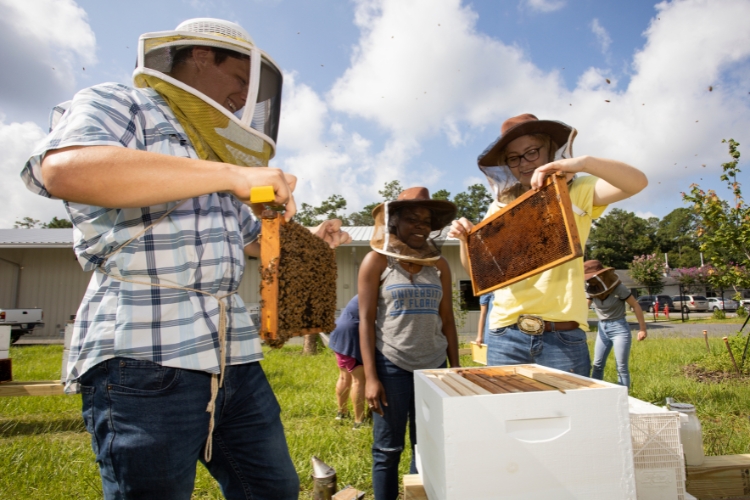
Bees are essential to our food systems, pollinating many of the fruits, vegetables, and other crops we rely on every day. However, pollinator populations face growing threats, from pests and disease to habitat loss and environmental stress.
Across the country, land-grant universities are stepping up to meet these challenges. Through cutting-edge research, on-the-ground Cooperative Extension, and strong community partnerships, land-grant experts are developing practical solutions that protect bee health and support the farmers, beekeepers, and communities who depend on them.
Featured photo courtesy of Tyler Jones/UF/IFAS.

Improving Bee Habitat and Nutrition
Healthy pollinators depend on healthy environments.
At Washington State University, researchers are improving bee nutrition through forage mapping and supplemental diet studies that boost colony growth. At The Ohio State University, scientists are protecting over 400 bee species by developing conservation and monitoring strategies, reducing pesticide exposure, and improving urban and agricultural habitats.
Tackling Threats to Bee Health
From destructive mites to newly emerging pests, land-grant researchers are helping beekeepers stay ahead of serious risks.
At Auburn University, scientists are improving how beekeepers monitor and manage Varroa mites while preparing the industry for invasive threats like Tropilaelaps. In Alaska, University of Alaska Fairbanks Extension professionals responded rapidly to the state’s first detection of the small hive beetle, by equipping beekeepers with tools to contain and eliminate the pest before it could damage the hive’s honey stores.
Supporting Beekeepers and Communities
Land-grant universities translate science into action through Cooperative Extension.
At Michigan State University, statewide conferences provide hundreds of beekeepers with practical, research-based training to improve colony health and pest management, ensuring that beekeepers can apply the latest science in the field. Penn State scientists support pollinators through a team of trained community scientists who identify and collect bee species, helping expand biodiversity data and strengthen public engagement in conservation.
Land-grant universities play a unique role in protecting pollinators by connecting research, education, and communities. On World Bee Day, their work shows how coordinated, practical solutions can reduce colony losses, strengthen ecosystems, and secure the future of agriculture.
Share this Post