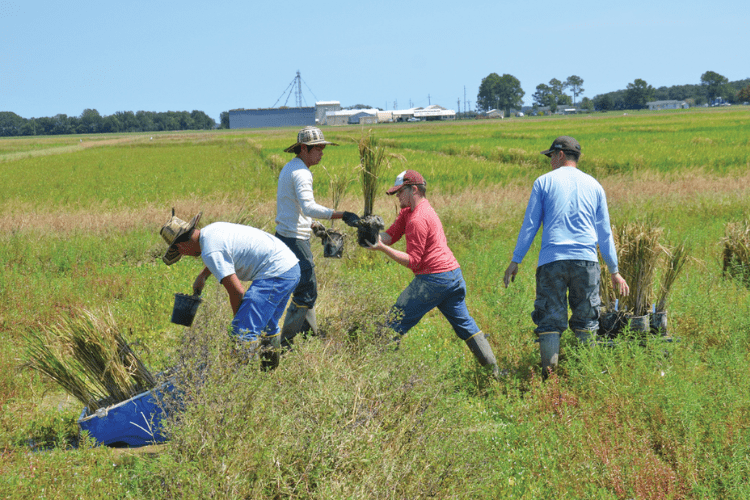
Land-grant universities stimulate economic growth by aligning research, education, and Extension with the needs of farmers, entrepreneurs, and businesses across the nation. These institutions translate discovery into practical solutions that expand markets, strengthen industries, develop new products, help producers navigate economic shifts, equip businesses with essential expertise, and create jobs. Together, these efforts support sectors including food production, forestry, agritourism, trade, and others. In doing so, land-grant universities serve as engines of thriving local economies and resilient communities.
LAND-GRANT IMPACTS EXAMPLES
- Michigan State University Product Center drives food business growth, job creation, and innovation
Michigan State University
Since 2003, the Michigan State University Extension’s Product Center has supported business expansions resulting in more than $446 million in total investments and the creation of 3,729 jobs. The Center delivers statewide business development, technical expertise, and access to advanced food processing facilities to help entrepreneurs and established companies succeed.
Primary Funding Source: Smith-Lever (3b&c) Capacity Funds - Helping Farmers Navigate Global Trade Challenges
Virginia Tech
As the U.S. develops new trade policies, this work helps leaders make better decisions providing timely, data-driven evidence of potential costs and benefits that can lead to stronger trade deals and better outcomes for our farmers.
Primary Funding Source: Hatch Multistate Capacity Fund - Securing Kansas' Agricultural Future: A Multi-State Farm Transition Initiative
Kansas State University
Kansas agriculture faces a critical transition point. Within the next two decades, approximately 70% of U.S. farmland, representing billions of dollars in agricultural assets, is expected to transfer to new ownership. In Kansas, 65% of primary farm operators are age 55 or older, creating an urgent need for structured succession planning. In partnership with the University of Nebraska-Lincoln and Purdue Extension, K-State Extension delivered an educational series that brought farm transition expertise directly to Kansas families.
Primary Funding Source: Smith-Lever (3b&c) Capacity Funds and County Funding - Rural West Virginia Farmers Strengthened Economic Prosperity Through Farm Agritourism
West Virginia University
The WV Agritourism Farm Crawls strengthens rural economies and expands consumer access to locally produced food and agricultural experiences across West Virginia. By connecting the public directly with working farms, the Farm Crawl program also improves agricultural literacy, builds community pride, and fosters long-term support for the state’s agricultural and tourism sectors. In 2025, 80 participating farms hosted an average of 100 visitors each and reported revenue increases of up to 500%.
Primary Funding Source: Smith-Lever (3b&c) Capacity Funds - Mizzou Researchers Patent First Black Walnut Cultivar, Help Expand State Industry
University of Missouri
Mizzou’s newly patented "Hickman" Walnut – a product of more than 25 years of development – is a key step toward expanding Missouri's tree nut industry, offering greater economic opportunities for growers through improved nut production.
Funding Sources: USDA Competitive and State Appropriations - Building Economic Resilience by Expanding Forest Landowners’ Market Awareness
Mississippi State University
Through accessible, localized forest economics education, Mississippi State University Extension’s comprehensive forest economics outreach program increased knowledge, reduced financial risks, and strengthened decision-making for nearly 2,000 stakeholders, generating broader economic and community benefits for Mississippi’s forest-dependent regions.
Primary Funding Source: Smith-Lever (3b&c) Capacity Funds - UMES teaches alley cropping to boost farm profits
University of Maryland Eastern Shore
Alley cropping can increase small farmer profits by incorporating more variety and reducing water usage. Rural areas then have a greater variety of fresh, nutritionally dense food available. UMES Extension helps small-scale farmers adopt alley cropping and other profitable, ecologically friendly practices.
Primary Funding Source: 1890 Extension Capacity Funds - Research aims to improve viability of regional wine production
Iowa State University
A multi-state effort led by Iowa State University supported regional grape and wine production and expanded market opportunities for the industry. The enology and viticulture industry represents significant economic value in the U.S., with potential to provide benefits outside of the West Coast’s prime wine grape-growing region.
Funding Sources: Hatch Multistate Capacity Funds and USDA Capacity - Research - Oregon State research vital for Oregon's nursery industry success
Oregon State University
Oregon State advances precision irrigation, efficient pesticide application and stress-tolerant ornamental plants, helping Oregon’s $1 billion nursery and greenhouse industry conserve water, cut costs and remain nationally competitive.
Funding Sources: State Appropriations and USDA Capacity – Research - Backyard Pigs to Booming Business
College of Micronesia
The Federated States of Micronesia (FSM) relies heavily on imported pork due to a decline in local production. The Swine Production Extension Program fosters a culture of responsible livestock management, strengthens food security, and contributes to the economic resilience of the islands. Public awareness campaigns have further amplified the program's impact by educating the broader community.
Primary Funding Source: Smith-Lever (3b&c) Capacity Funds - Extension supports economic success in rural Nevada with pomegranate research
University of Nevada, Reno Extension
By supporting small-scale growers to adopt novel pomegranate cultivars and better respond to consumer preferences, this program strengthens local agriculture, diversifies income sources and supports rural economic resilience. In the long run, this kind of innovation reduces dependency on large corporate suppliers and helps maintain agricultural diversity and local food sovereignty.
Funding Sources: USDA Capacity – Research and County Funding - Researcher “Speed-Breeds” Small Grain Varieties to Boost Crop Production in Alaska
University of Alaska Fairbanks
A University of Alaska Fairbanks researcher is using a "speed-breeding" process to accelerate the development of suitable varieties of small grain crops, which can improve Alaska's food production, promote economic development, and strengthen Alaska’s food system.
Primary Funding Source: Hatch Capacity Funds
Land-grant universities embody the transformative power of integrating research, education, and Extension to drive domestic economic development. By turning discovery into useful solutions for farmers, entrepreneurs, and businesses, these institutions spur progress and strengthen local and regional economies. Land-grant universities also cultivate the next generation of agricultural innovators, which reinforces their vital role as engines of longer-term economic growth and a strong national food system. This critical work ensures that U.S. agriculture and related industries remain competitive, vibrant, and resilient in a rapidly changing world.
SOCIAL MEDIA
SAMPLE POSTS
Land‑grant universities drive local and regional economic growth by turning research and Extension expertise into real‑world solutions. See how @university is helping [state] [producers/entrepreneurs/etc] thrive: [project]
.@university Cooperative Extension experts help farmers and producers adapt, stay competitive, and keep their operations profitable in an ever-changing landscape. Here's how: [project]
Innovation fuels strong economies. @university research directly benefits [state's] producers, through discoveries like [project].
Looking for pre-made stories to feature? Check out:
- Land-grant Impacts
Scroll down to "View by Institution" and click your university's name. Only institutions who submitted impacts to the National Impacts Database in 2025 are listed. This page features research and Extension impacts. - Multistate Research Funds Impacts
Scroll down to "Filter by Institution" on the sidebar and click your university's name. This page features research impacts.
Feel free to reach out to us with specific posts that you would like @AgIsAmerica to share. Please email your request to Kim Scotto at agcomms@aplu.org or use #AgIsAmerica.
HASHTAGS AND HANDLES
HASHTAGS
#LandGrantUniversities
#AgIsAmerica
HANDLES
|
Ag is America |
@AgIsAmerica |
|
APLU Ag |
@APLU_Ag |
|
USDA |
@USDA |
|
USDA National Institute of Food & Ag |
@USDA_NIFA |
|
APLU |
@APLU_News |
CALENDAR
APRIL HOLIDAYS
MONTHS
National Garden Month, #NationalGardenMonth
National Pecan Month, #NationalPecanMonth
National Soy Foods Month, #NationalSoyFoodsMonth
National Volunteer Month, #NationalVolunteerMonth
WEEKS
April 5-9: National Wildlife Week, #NationalWildlifeWeek
April 6-12: National Public Health Week, #NPHW
April 19-25: National Volunteer Week, #NVW
DAYS
April 1: National Walking Day, #NationalWalkingDay
April 7: National Beer Day, #NationalBeerDay
April 7: World Health Day, #WorldHealthDay
April 14: National Gardening Day, #NationalGardeningDay
April 14: National Pecan Day, #NationalPecanDay
April 15: National Banana Day, #NationalBananaDay
April 16: National Orchid Day, #NationalOrchidDay
April 17: National Crawfish Day, #NationalCrawfishDay
April 19: National Garlic Day, #NationalGarlicDay
April 20: Volunteer Recognition Day, #VolunteerDay
April 21: National Rendering Day, #NationalRenderingDay
April 22: Earth Day, #EarthDay, #InvestInOurPlanet
April 24: National Arbor Day, #ArborDay
April 25: World Veterinary Day, #WorldVeterinaryDay
April 29: Stop Food Waste Day, #StopFoodWasteDay